Monday, 22 August 2011

In de ogen van de jaguar - Dans les yeux du jaguar

Dans les yeux du jaguar
 22-08-2011  linternaute.com, Frankrijk

                                             
Jaguar Suriname


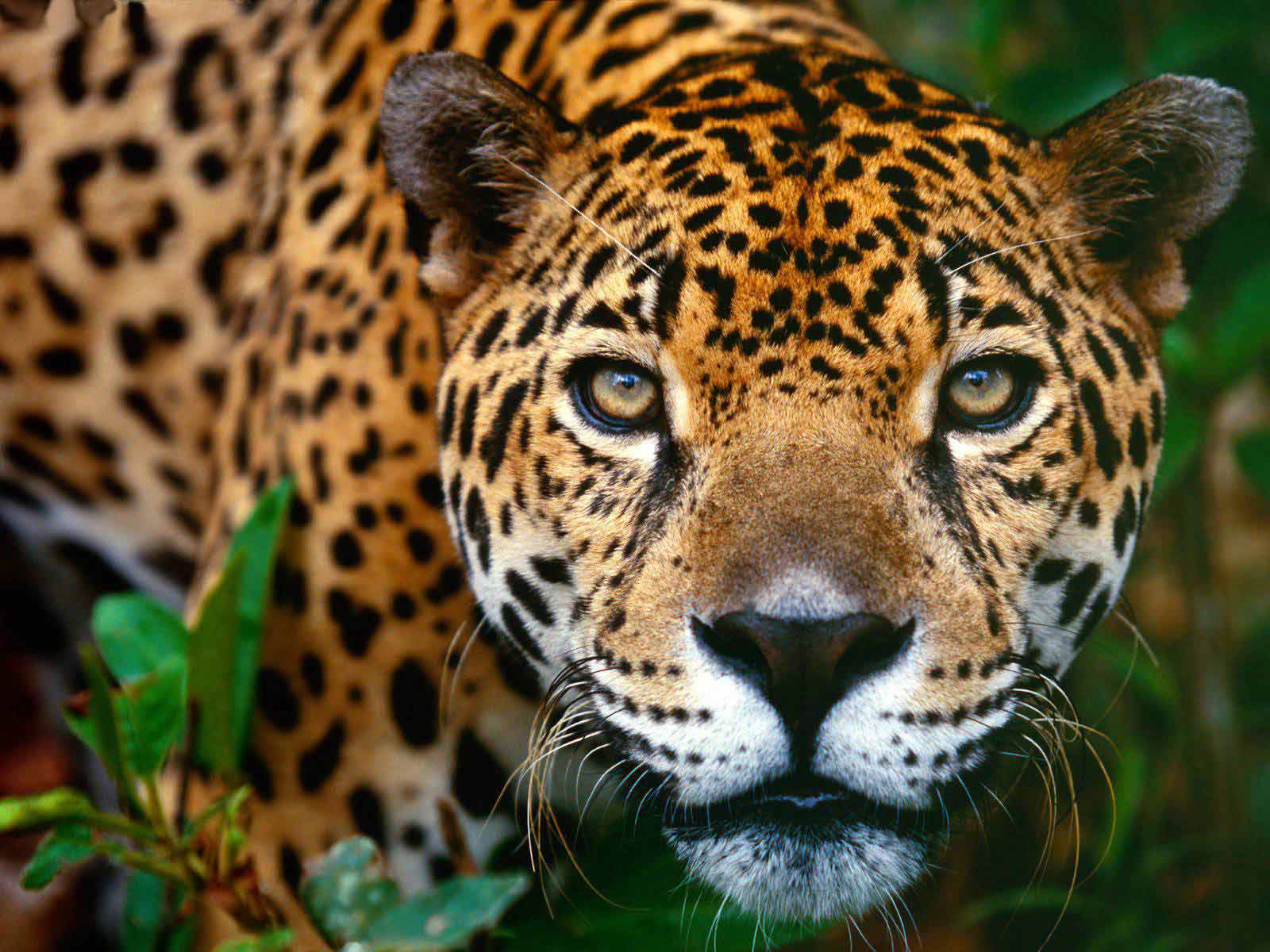
Alors qu'il se déplaçait dans la forêt tropicale du Suriname, ce jaguar a été surpris par le déclenchement du piège photographique. Bien qu'il soit protégé et pratiquement en danger d'extinction, il est souvent apparu sur les clichés de l'étude. Pour le docteur Ahumada, l'ampleur de son travail ne doit pas seulement servir à obtenir des chiffres, mais aussi à protéger des espèces qui souffrent autant de la chasse que de la déforestation.

©  Conservation International Suriname / TEAM Network

Wednesday, 18 November 2009

Volunteers rehabilitate abused wildcats in Bolivian jungle sanctuary

Walkies! Volunteers rehabilitate abused wildcats in Bolivian jungle sanctuary

18-11-2009  By Daily Mail Reporter, The Daily Mail, UK


Deep in the heart of the Bolivian jungle an animal conservation worker wanders through the undergrowth flanked by a wild jaguar.

But this is not the prelude to a horrific attack, rather an unorthodox technique used by passionate volunteers who go to extraordinary lengths to save these often doomed animals.
The Comunidad Inti Wara Yassi (CIWY) is a unique animal rescue centre where locals and volunteers help to rehabilitate animals through direct contact.

Time for a walk: British volunteer Caroline Almond and Pedro, a Chilean veterinarian, with Katie the jaguar at the Ambue Ari Reserve in Bolivia
 
Rescuing wild animals such as monkeys, birds, pumas, and jaguars from Bolivia's black market or abusive situations, CIWY's goals are to readapt the animals and, when possible, to release some of them within the Parque Ambue Ari.
Located in the central-Bolivian region of Santa Cruz, CIWY's 1,991-acre jungle compound has become recognised as one of the world's leading and most controversial animal rescue centres.
'We get the animals from all across Bolivia and the border with Peru,' said Karen Peter, a 45-year-old volunteer who has been stationed at CIWY for two years.
'The illegal trade and purchasing of exotic cats such as jaguars is an increasing problem in Bolivia.
'We trawl the back street markets and set up phoney deals just to get our hands on cats that have fallen into the wrong homes or hands.

Time for a dip: A volunteer beckons to a puma to join him for a swim

'Sometimes it is just people who thought that they would make a good pet, when of course they do not.
'The trade is poorly enforced by the authorities in Bolivia and that is where we step in to correct this poor management.' 
Each day, live-in volunteers walk these predatory felines, some weighing as much as 260lbs, on a leash through the jungle.
'When the animals are brought to our preserve in Ambue Ari they are initially put into a 40-day quarantine.
'There are 26 animals currently on our preserve, including ocelots and pumas.
'At the moment we have six jaguars.

Taking the plunge: The female feline leaps into the water

'The animals are kept in separate large cages and are assigned volunteers to rehabilitate them.
'They are walked around outside their cage by a minimum of two volunteers at one time and a maximum of three.
'Each jaguar spends up to seven or eight hours outside the cage a day to readjust them to a semi-wild existence.
'It must be remembered that some of the animals have never spent any time in the wild and are totally dependent on humans for their lead and food.
'The jaguars are all under the age of ten and we have three boys and one girl.
'There is one jaguar who is never walked on account of his upbringing and that is Sama, who is ten.
'Nearly all of the animals will stay in the preserve as they do not have the skills.' 

Tea time: Yaguarupi the jaguar dines on raw meat provided by the sanctuary

Founded by Juan Carlos Antezana in 1996, the Comunidad Inti Wara Yassi began as a 93-acre jungle reserve for monkeys rescued from homes and markets.
Located on the fringes of the town of Villa Tunari, the centre is now made up of three sanctuaries that cover 1,991-acres, where up to 40 volunteers are on site to care for the multitude of animals.
Over the past 13 years, CIWY has rescued thousands of animals, and it opened a third park this summer.
Largely funded by volunteers and private donations, the organisation does not receive monetary support from the Bolivian government. But the centre organisers say animals seized by government raids often end up in their care.
In 2006, Antezana was chosen as one of five passionate conservationists featured in Animal Planet's Jane Goodall's Heroes, and received $5,000 (£2,900) to continue his work.
Yet despite the dangers faced by the staff at the CIWY, Karen Peter is eager to point out that safety for both the animals and the volunteers are paramount.
'The volunteers are fully trained in understanding the danger signs from the jaguars - we have never had a volunteer seriously injured,' said Karen.
'Ears pricked up, wide eyes and a wagging tail are all signs to give the calm signal to the jaguar.
'The calm signal is to say "tranquilo" in Spanish and therefore instruct the jaguar to relax.
'We have never had an unfortunate accident and we don't intend to.
'The volunteers walk round with the cats for the animal's safety.
'The illegal traders know we keep around 30 animals here and they would love to come and steal them. Walking with the volunteers stops this from happening.' 


Read more: http://www.dailymail.co.uk/news/article-1228958/Walkies-Volunteers-rehabilitate-abused-wildcats-Bolivian-jungle-sanctuary.html#ixzz2zXHfVKNM
Follow us: @MailOnline on Twitter | DailyMail on Facebook

Friday, 20 June 2008

El jaguar en peligro de extinción en Venezuela

El jaguar en peligro de extinción en Venezuela

20-06-2008 Paginas Amarillas Cantv, Venezuela


Su hábitat es la región selvática de la Zona Tropical. Prefiere las selvas con ríos y caños. Hoy existen cerca de 2.500 ejemplares. Muchos de ellos con cicatrices de disparos por intentos de caza. El jaguar ha sufrido una reducción significativa en su distribución original.

Su límite al norte ha retrocedido unos 1.000 km y sólo permanece en 33 y 62% de su área de distribución en Centro y Suramérica, respectivamente.

En Venezuela, hasta los años cincuenta, el jaguar presentaba una amplia distribución. Hoy en día sólo las poblaciones localizadas en los estados Amazonas y Bolívar permanecen relativamente estables; las localizadas en Sierra de Perijá, llanos occidentales, piedemonte andino y delta del Orinoco se encuentran en constante disminución, y en la Cordillera de La Costa prácticamente están extintas.

La mayor presión sobre el jaguar está localizada en la población ubicada en la cuenca del Lago de Maracaibo. La especie ha sido declarada vulnerable de extinción por la Unión Mundial para la Naturaleza.

En Argentina y Ecuador es considerada en peligro de extinción, mientras que en Perú su situación es vulnerable. Principales amenazas: El comercio peletero internacional, la cacería deportiva, el control de depredadores y la sobreexplotación de sus presas, han sido las razones principales de que las poblaciones de jaguar se encuentren tan disminuidas en Venezuela.

Sin embargo, actualmente el factor más importante, en cuanto a la disminución que aún experimentan sus poblaciones, es la pérdida de hábitat por deforestación de zonas boscosas con fines forestales y mineros o para su transformación en áreas agrícolas y ganaderas.

Para obtener información de otro interés, te invitamos a que consultes las siguientes clasificaciones:
Alimentos para Animales, Animales Artículos y Ventas de, Animales Crianza de, Organizaciones e Institutos Nacionales, Laboratorios Veterinarios, Veterinarios Servicios y Productos, de la Sección Animales y Mascotas de Páginas Amarillas Cantv.

Thursday, 25 October 2007

Doodgeschoten jaguar in vriezer keuken restaurant in Uitvlugt, Paramaribo - Dead jaguar found in kitchen restaurant in Paramaribo

Tijgervlees in Surinaams restaurant          
 25-10-2007  Times of Suriname
PARAMARIBO - De politie van bureau Uitvlugt in Paramaribo heeft bij een restauranthouder een tijger in beslag genomen die vermoedelijk een dag eerder was doodgeschoten.

Eerder hadden omstanders telefonisch gemeld dat ze meenden een tijger gezien te hebben in de keuken van het restaurant.

Toen de politie ging kijken werd het dode beest inderdaad aangetroffen en in beslag genomen. Het dier was opgeslagen in de vriezer en vertoonde schotwonden. Het vlees was nog vers, meldt de Times of Suriname.

Waarvoor de restauranteigenaar het vlees wilde gebruiken, is nog niet bekend. De zaak wordt verder onderzocht.

Noot:
Natuurlijk gaat het hier om het vlees van een jaguar. De jaguar wordt in Suriname ook wel 'tigri' genoemd.